
Implementation Timeline

What happens before, during, and after go-live.

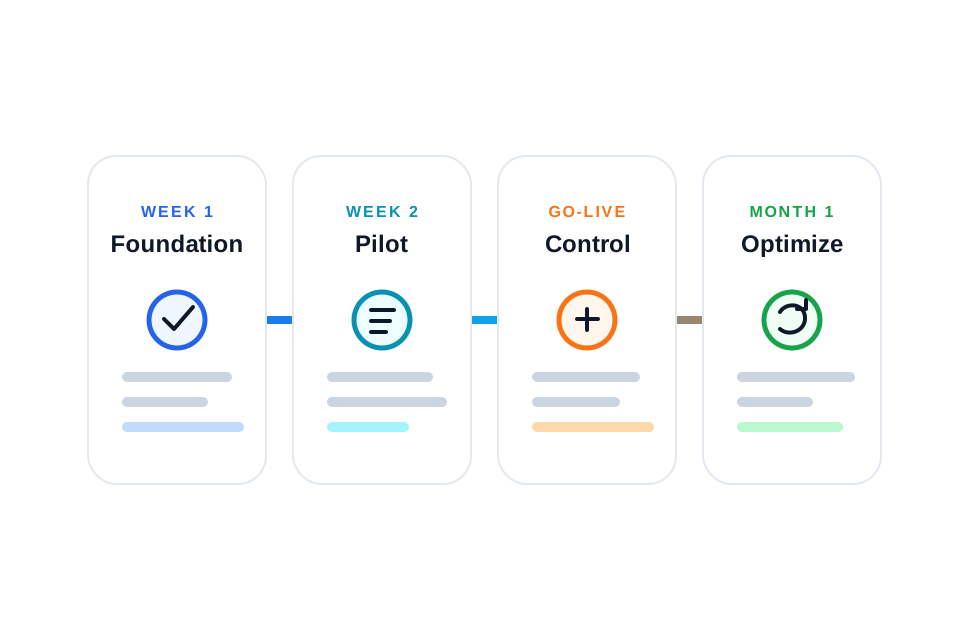
We help teams move into AWRA with a timeline that feels controlled from the first workshop. Week 1 builds the foundation, week 2 proves the workflow, go-live protects the business day, and month 1 turns adoption into measurable operating rhythm.

Implementation should not feel like a vague promise. We make the path visible so sponsors, operations leads, finance, procurement, warehouse teams, and IT know what AWRA is doing, what your team is preparing, and which decisions need to be made before the next stage opens.

AWRA implementation timeline from week one to month one optimization
The Rollout Rhythm

A clear path from preparation to confident daily use.

Every implementation has its own complexity, but the rhythm below is the one we use to keep enterprise rollouts honest. We start with the operating model, prove the workflows with real users, protect go-live with support coverage, then optimize based on live evidence.

Week 1

Foundation, scope, and clean starting data

We align the rollout around the workflows that matter first, confirm ownership, and prepare the records AWRA needs to become trustworthy from day one.

Confirm modules, branches, roles, and go-live success measures.
Map current inventory, procurement, sales, finance, vendor, and reporting processes.
Prepare item masters, vendors, customers, users, locations, opening balances, and approval rules.
Identify policy decisions that must be made before configuration is locked.

Stage Outcome

By the end of week 1, everyone knows what will go live, who owns each workstream, which data is ready, and which exceptions require sponsor decisions.

Week 2

Configuration, pilot transactions, and role-based training

We turn the agreed operating model into AWRA configuration, then run realistic transactions with the people who will use the system every day.

Configure roles, permissions, approval paths, inventory locations, procurement flows, and reporting views.
Run pilot inventory movements, RFQs, quotations, purchase orders, sales/POS actions, and finance review scenarios.
Train teams by role instead of overwhelming everyone with every module.
Track issues in a readiness log so blockers are visible and closed before go-live.

Stage Outcome

By the end of week 2, your team has touched the workflows, leadership has seen the readiness risks, and the go-live decision is based on evidence instead of hope.

Go-Live

Controlled launch with support close to the action

We keep the launch focused, visible, and calm. The goal is not dramatic change. The goal is stable work, fast issue triage, and clean operational continuity.

Confirm cutover checklist, user access, opening data, and escalation contacts.
Monitor first transactions across inventory, procurement, sales, finance, and reporting.
Resolve workflow questions quickly and document decisions that affect process discipline.
Protect the team from reverting to spreadsheets and inbox workarounds when pressure rises.

Stage Outcome

Go-live ends with a working operating rhythm, a known issue list, and a practical support plan for the first full business cycle.

Month 1

Adoption, optimization, and executive confidence

Once AWRA is live, we help the team move from basic usage to stronger control. Month 1 is where reporting quality, automation opportunities, and leadership visibility become clearer.

Review adoption signals, exception volume, approval speed, stock accuracy, RFQ discipline, and report usage.
Tune dashboards, permissions, notifications, templates, and automation rules based on real activity.
Run health checks with operations, finance, procurement, warehouse, and leadership owners.
Agree the next optimization backlog for integrations, advanced workflows, mobile usage, and governance.

Stage Outcome

By the end of month 1, AWRA should feel like the operating base, not a new system people are still circling from the outside.

Readiness Gates

We do not treat go-live as a calendar event only.

Dates matter, but readiness matters more. AWRA rollouts use simple gates so everyone can see whether the business is ready to proceed. If a gate is weak, we address it openly instead of hiding the risk until launch day.

Data Confidence

Core records are complete enough for daily work: items, vendors, customers, users, locations, balances, and approval ownership.

Workflow Proof

Critical scenarios have been tested by real users, including exceptions and handoffs between teams.

Access Control

Roles, permissions, vendor access, MFA expectations, and escalation contacts are agreed before launch.

Reporting Trust

Leadership understands what early dashboards show, what is still stabilizing, and what decisions the reports can support.

Enterprise Readiness

The timeline gives sponsors something concrete to manage.

We make implementation visible because enterprise teams need confidence before they commit operations to a new system. The timeline helps sponsors see where decisions are stuck, where users need more support, and where AWRA is ready to carry more of the operating load.

Weekly sponsor checkpoints with clear decisions and blockers.

Role-by-role adoption review instead of generic training completion.

Issue triage across process, data, access, reporting, and support ownership.

Month-one optimization backlog tied to operational evidence.

Want AWRA to map your rollout timeline?

We can walk through your locations, users, modules, data readiness, and launch constraints, then shape a timeline your team can actually trust.