
Inventory Control
How well your team controls stock records, movements, adjustments, and branch visibility.
We built this checklist to help teams see where operations are disciplined, where control depends on memory, and where AWRA can replace spreadsheet pressure with clearer workflow ownership.
Answer each statement honestly. The score is not a judgment; it is a working snapshot of how much operational risk is still hiding in stock movements, procurement decisions, approvals, and reporting routines.
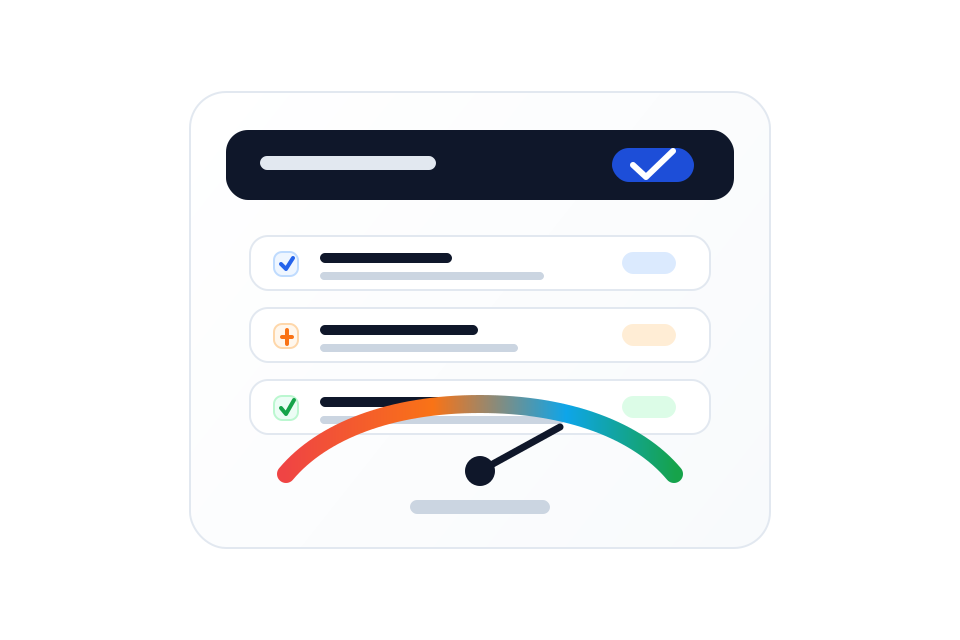
Use the scale on each question: not true yet, partly true, mostly true, or controlled. We calculate your maturity level as you answer and show where AWRA would typically focus first.
How well your team controls stock records, movements, adjustments, and branch visibility.
How reliably requests, RFQs, quotations, approvals, and POs move through a controlled path.
How clearly the business can see who approved, changed, delayed, or completed operational work.
How quickly leadership can understand operational health without rebuilding reports manually.
A maturity assessment is useful only if it changes what the team does next. We use the result to choose where AWRA should reduce risk first: stock accuracy, procurement discipline, approval control, or leadership visibility.
Start with source-of-truth records, access discipline, and the daily workflows that create the most operational confusion.
Formalize approvals, RFQs, stock movements, and reporting routines so the business depends less on reminders and manual cleanup.
Tune exception handling, automation rules, branch visibility, vendor performance, and leadership dashboards.
Use AWRA to strengthen predictive signals, workflow automation, integrations, governance cadence, and continuous improvement.
Smart Recommendations
The assessment is useful when it changes the next decision. These paths help teams translate weak maturity signals into rollout planning, resource cleanup, and the control layers that improve daily execution.
Use the guide to turn control gaps into owners, phases, pilot workflows, training, and launch gates.
Use import guides, role examples, procurement checklists, count prep, and audit review resources.
Move approval delays, exception follow-ups, reminders, and recurring reviews into governed automation.
Recommended maturity path
Find weakest area
Assign an owner
Choose cleanup asset
Track monthly progress
Assessment teams also open
If your score shows weak control, AWRA does not start by throwing every module at the team. We choose the workflows that will create trust fastest, then expand into procurement, finance, reporting, automation, and governance as the operating rhythm strengthens.
Inventory controls that make stock data believable enough for decisions.
Procurement workflows that reduce quote chasing and unclear approvals.
Permission structures that match real responsibility.
Reports that leadership can use without rebuilding spreadsheets.