
RFQ Review
Suppliers can open buyer requests, review item details, understand deadlines, and prepare responses with the right context.
We give invited suppliers a clear, secure workspace to respond to RFQs, submit quotations, review purchase orders, and keep buyer collaboration out of scattered email threads.
The portal is built for the real procurement moments that slow both sides down: missing quote details, unclear PO status, repeated follow-ups, delayed delivery updates, and questions that disappear into inboxes. AWRA keeps those interactions connected to the buyer's procurement record so suppliers know what to do next and buyers can evaluate responses with confidence.
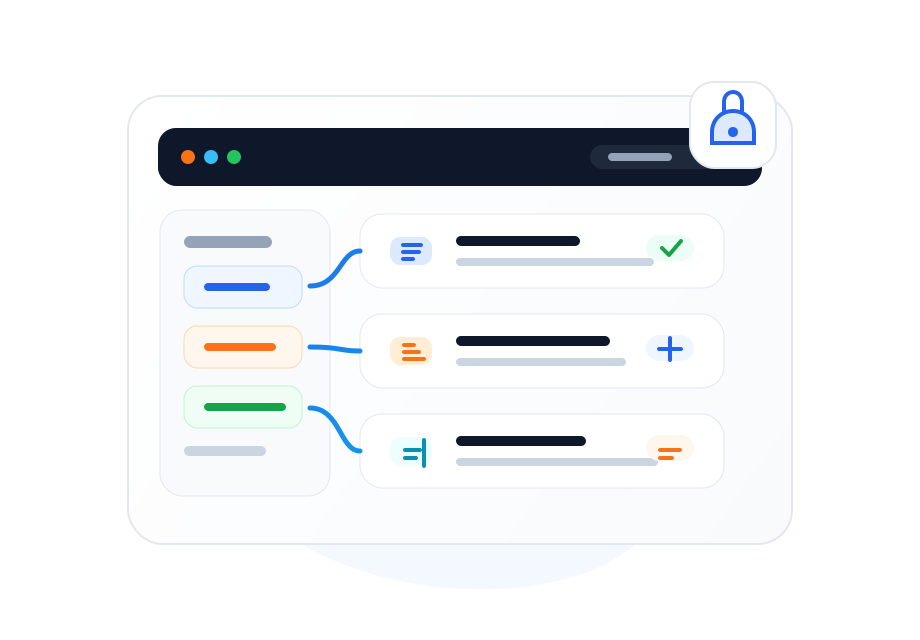
We designed the vendor experience around the work suppliers actually receive from procurement teams. Instead of asking vendors to decode long email chains, retype the same company details, or chase the buyer for status, AWRA presents each action in a structured workspace tied to the original request.
Suppliers can open buyer requests, review item details, understand deadlines, and prepare responses with the right context.
Vendors submit pricing, lead times, notes, and attachments in a format the buyer can compare without manual re-entry.
Approved suppliers can review purchase orders and keep the buyer informed as order decisions move forward.
Supplier accounts stay scoped to vendor workspaces, with buyer-controlled visibility and a login path separate from internal team access.
Suppliers can keep fulfillment status visible so receiving teams prepare earlier and procurement avoids repeated follow-up.
Questions, clarifications, documents, and response history stay connected to the RFQ, quote, or purchase order they belong to.
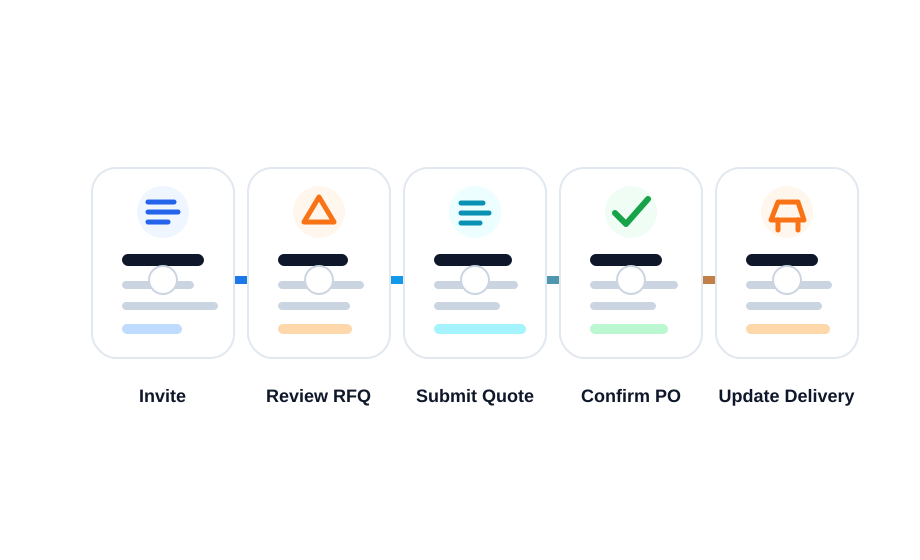
Procurement breaks down when the buyer has one version of the request, the supplier has another, and finance receives a purchase order that does not explain the sourcing decision. AWRA keeps the chain intact. RFQs, quotation responses, award decisions, purchase orders, and delivery updates remain part of one operational trail.
For suppliers, that means fewer ambiguous requests and fewer repeated questions. For buyers, it means cleaner comparison, stronger audit history, and less time spent reconstructing what happened after the fact. We make the supplier portal a practical extension of procurement, not a disconnected login screen.
Smart Recommendations
Supplier self-service becomes stronger when buyer controls can measure quote submissions, PO responses, delivery updates, and collaboration quality.
Vet suppliers through a no-login public application with AI scoring and risk flags, approve qualified ones straight into the vendor list, and get warned thirty days before an approval lapses.
Open recommendationA scorecard stored for every supplier each night — on-time delivery, order quality, disputes, price drift and lead time — on the vendor’s page and in the performance report.
Open recommendationScore portal submissions on total price, delivery time and distance — and, when you switch it on, each supplier’s stored track record — before the award is made.
Open recommendationCarry supplier acknowledgements, delivery updates, mismatches, and receiving evidence into controlled PO closeout.
Open recommendationRecommended supplier path
Invite supplier
Collect quote
Confirm PO
Track delivery
Customers like you also use
We do not treat supplier access as an afterthought. When buyers invite vendors into AWRA, the portal helps both organizations work from the same procurement truth while still respecting role boundaries and secure access.
Supplier portals only work when vendors understand what the workspace is for. AWRA keeps the experience focused on procurement collaboration, not broad access to a buyer's internal system.
No. Suppliers use vendor portal access provided through the buyer workflow. Their workspace is scoped to supplier activities such as RFQs, quotations, purchase orders, and relevant updates.
No. The portal is designed around controlled supplier visibility. Vendors see the requests, documents, and actions the buyer makes available to them.
Not always, but it reduces the risky parts of email. We keep key RFQ, quote, PO, and update history in AWRA so decisions are easier to trace.
Yes. A supplier submits its invoice against one of its purchase orders, billing only that order’s lines. It arrives on the buyer’s side as a bill awaiting approval, everyone who can approve bills is told, and nothing is payable until someone approves it. The supplier sees the bill’s status on the order.
Yes. Supplier submissions feed into the buyer procurement workflow so teams can compare responses, review approvals, and move toward purchase orders with cleaner evidence.
We can walk your procurement team through supplier invitations, RFQ responses, quotation review, purchase order actions, and the vendor login experience.
