

Ask AwraIQ about features, pricing, onboarding, login, integrations, security, demos, mobile apps, automation, reports, or support.
Strategic Sourcing Desk
Compare vendors with evidence, not inbox memory.
AWRA strategic sourcing brings RFQs, quotations, vendor responses, pricing context, and approval decisions into a controlled workflow so procurement teams can choose the right supplier with fewer blind spots.
RFQ Pipeline Open
Vendor Risk Scored
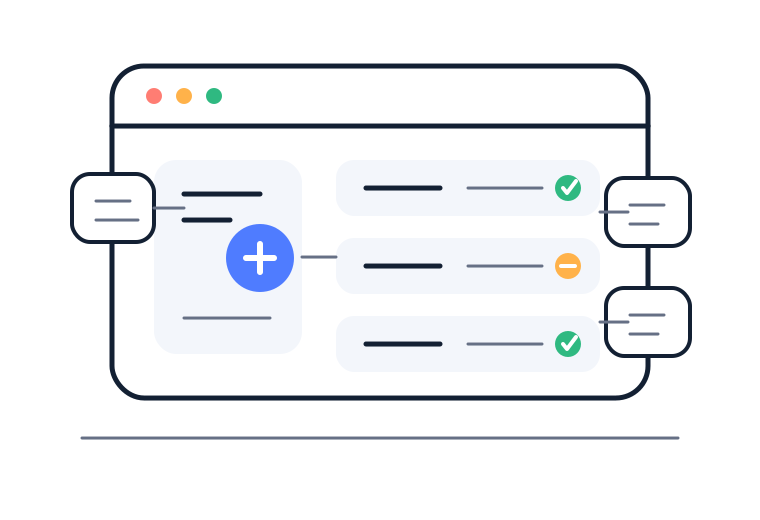
Quote Comparison Normalized
Supplier History Visible
Decision Trail Audited
RFQ Workflows Quotation Review Vendor Scoring Approval Routing Procurement Risk
Sourcing intelligence
A sourcing decision is more than the cheapest line item.
AWRA helps teams compare price, lead time, vendor history, approval status, quote completeness, and procurement risk before converting a sourcing decision into a purchase order.
RFQ Control
Create structured RFQs, invite vendors, track response status, and preserve sourcing context.
Quote Normalization
Compare vendor responses side-by-side using cleaner item, price, quantity, and delivery context.
Vendor Scorecards
Use supplier history, delivery discipline, quote behavior, and approval outcomes to guide decisions.
Procurement Risk
Flag missing responses, high-value awards, delayed vendors, unusual pricing, and approval bottlenecks.
Procurement workflow
Move from request to award without losing the decision record.
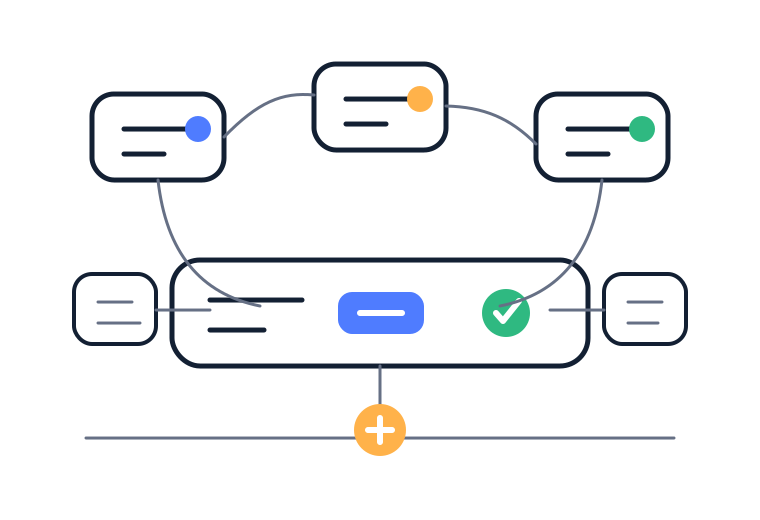
Strategic sourcing keeps the full chain visible: why the request exists, which vendors were invited, what each vendor offered, who reviewed it, and why the winning supplier was selected.
01
Start From Need
Use procurement requests, reorder signals, or project needs to start controlled sourcing.
02
Invite Vendors
Send RFQs to selected vendors while keeping communication and response state visible.
03
Compare Quotations
Review price, lead time, notes, quote completeness, and historical vendor reliability together.
04
Approve Award
Route high-value or sensitive decisions through the right approval path before purchase order creation.
05
Create Purchase Order
Convert the winning decision into downstream procurement, receiving, and finance workflows.
Decision controls
Give procurement teams speed without turning supplier choice into guesswork.
AWRA keeps sourcing decisions explainable. The lowest quote is visible, but so are delivery reliability, quote history, risk signals, and approval requirements.
Price Discipline
Compare submitted prices against expected ranges, previous purchases, and vendor behavior.
Vendor Reliability
Use history to identify suppliers that quote well but deliver late or create receiving friction.
Award Evidence
Keep the reason behind the selected vendor attached to the sourcing event.
Approval Fit
Escalate awards based on value, budget pressure, risk, or internal approval policy.
Supplier contracts & call-offs
Agree the prices once, then buy against them.
A supplier contract records the items you have agreed to buy, the unit price of each, the dates it runs between and, if you set one, a value ceiling and a maximum quantity per item. Buying against it is a call-off: pick the items and quantities, and AWRA raises a quotation at the contract prices — no fresh tender.
That quotation starts as pending and takes the same road as every other: approval (including any approval rules your workspace sets), budget control, the purchase order, receiving and matching. The contract adds the limits — a call-off outside its dates, above an item’s quantity or past the ceiling is refused.
Catalogue, dates and ceiling
Items and unit prices, a start and end date, an optional value ceiling and per-item maximum quantities.
Call-offs at the agreed price
A call-off becomes a pending quotation priced from the contract, marked as the contract’s, and approved and ordered like any other.
Quotes above the contract flagged
When the same supplier quotes an item above its price on a contract in force, the quotation shows the difference before anyone approves it.
Renewal warnings and expiry
A daily check warns whoever manages vendors ahead of a contract’s end, on its own notice period, and marks contracts past their end date expired.
What AWRA OpsHub does today
- Supplier contracts with an item catalogue, unit prices, start and end dates, an optional value ceiling and per-item maximum quantities.
- Call-offs that raise a pending quotation at the contract prices, approved and ordered through the normal quotation and purchase-order steps, on the web and in the mobile app.
- Refusals at call-off: outside the contract dates, above an item’s remaining quantity, or past the remaining ceiling.
- A price-variance flag on any quotation from the same supplier priced above its contract for that item.
- A daily sweep that warns ahead of a contract’s end and marks expired contracts so nothing more is called off them.
More we can add to your workspace
- Automatic approval of call-offs within limits you set, so a routine call-off skips the approval queue.
- A standing blanket purchase order held as its own document, with releases drawn down against it.
- Supplier bill prices checked against the contract, flagging an invoice line billed above the agreed price.
Where we point you to a specialist
- A call-off is approved by a person, exactly like any other quotation. The contract fixes the price; it does not decide the spend.
Each of these builds on contract prices that are already stored per item. Tell us how your framework agreements are drawn down today.
Smart Recommendations
Sourcing teams usually explore these next.
After supplier choice comes operational proof: quote evidence, reliability signals, approval fit, and PO follow-through keep awards defensible.
Related sourcing feature
RFQs & Quotation Comparison
Normalize supplier responses, compare quote completeness, review lead time, and preserve award reasoning before purchase orders begin.
Open recommendation Related AI feature
Procurement Insights
Surface unusual pricing, vendor risk, approval pressure, RFQ drift, and delayed fulfillment before sourcing decisions slow down.
Open recommendation Related vendor feature
Supplier Collaboration & Vendor Performance
Use supplier response speed, quote quality, acknowledgement behavior, delivery reliability, and issue history to guide awards.
Open recommendationRecommended sourcing path
From supplier shortlist to controlled award.
01
Invite vendors
02
Score response
03
Approve award
04
Issue PO
Customers like you also use
Common questions
Controlled sourcing without slowing procurement down.
Does this replace procurement requests?
No. Requests can feed sourcing, then RFQs and quotations help decide the supplier.
Can vendors respond through the portal?
Yes. Vendor collaboration workflows support RFQ responses, quotations, and purchasing communication.
Can awards require approval?
Yes. High-value or sensitive supplier decisions can be routed for review before a PO is created.
Can we buy against a framework agreement?
Yes. Record it as a supplier contract with agreed prices, dates and an optional ceiling, then raise call-offs against it. Each call-off is a quotation at the contract prices that is approved and ordered as usual.
Is AI required?
No. Teams can use structured comparison and vendor history first, then add AI-assisted analysis where useful.
Help Center
Need a quick answer while you read?
Run inventory, procurement, assets, sales, and field work with approved AWRA guidance for setup, migration, integrations, security, pricing, and support.