The Kenyan Statutory Compliance Calendar (2026): PAYE, NSSF, SHIF, VAT & eTIMS
Every Kenyan business runs on a rhythm of statutory deadlines — and missing them costs penalties, not just paperwork. Here is the recurring compliance calendar in plain terms, what falls due when, and how to make the deadlines something your system handles rather than something you remember.
Running a compliant business in Kenya means living to a repeating calendar of statutory obligations: payroll deductions, health and pension contributions, the housing levy, VAT, and eTIMS on every invoice. None of them are optional, all of them carry penalties for lateness, and together they form a monthly rhythm that a growing business cannot afford to run on memory. This is a plain-language map of that rhythm. It is a practical guide, not tax advice — rates and dates shift with Finance Acts and regulatory changes, so always confirm the current specifics with KRA and your accountant before filing.
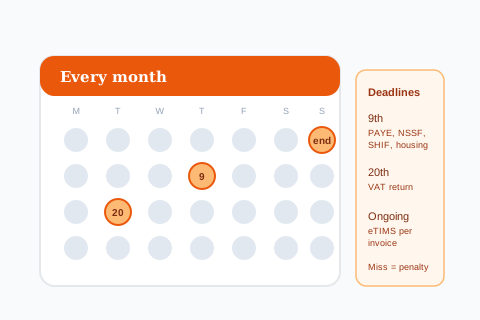
The recurring monthly rhythm
Most statutory obligations repeat every month on roughly fixed dates. The exact day can shift, so treat these as the shape of the month rather than gospel — but the shape is what matters for planning.
| Obligation | What it is | Typical timing |
|---|---|---|
| PAYE | Income tax deducted from employee pay, remitted to KRA | By the 9th of the following month |
| NSSF | Pension contributions (employee + employer) | By the 9th of the following month |
| SHIF | Social Health Insurance Fund contributions (replaced NHIF) | By the 9th of the following month |
| Housing Levy | Affordable Housing Levy on gross pay (employee + employer) | By the 9th of the following month |
| VAT | Value Added Tax on taxable supplies, filed and paid | By the 20th of the following month |
| eTIMS | KRA-compliant e-invoicing transmitted per invoice | Continuously, at point of sale |
Beyond the monthly cycle sit periodic obligations — instalment tax during the year, annual income-tax returns, and sector-specific filings — plus one-off events like registration changes. The monthly rhythm is where most businesses trip, because it is relentless and the amounts are only right if payroll and sales were recorded correctly all month.
Compliance is not a form you fill at month-end — it is a number your records either already know or frantically reconstruct.
Why clean records are the real compliance tool
The deadlines are only as accurate as your records
Here is the point most compliance checklists miss: filing on time is easy; filing the right amount is the hard part, and it depends entirely on whether your underlying records are clean. PAYE, NSSF, SHIF, and the housing levy are only correct if payroll was run accurately against real employee data. VAT is only right if every sale and purchase was captured with the correct tax treatment. eTIMS only works if invoicing flows through it in the first place. Chase the deadline with messy records and you file a wrong number on time — which is its own problem. The deadline is downstream of the discipline.
Make the system carry the calendar
A growing business should not run statutory compliance on one person's memory and a wall calendar. When payroll, sales, and purchases flow through a connected system, the statutory figures are a by-product of correctly recorded operations: payroll computes PAYE, NSSF, SHIF, and the housing levy from real pay data; eTIMS invoicing is generated from the ordinary sale; and VAT is assembled from transactions already captured with the right treatment. The calendar stops being a memory test and becomes a set of reports the system can produce on demand, reconciled to the books.
Our take
Do not manage compliance as a monthly memory exercise — build it into how you record operations. Run payroll on real data so statutory deductions compute themselves, invoice through eTIMS so it is never a bolt-on, and keep VAT records clean at the transaction. Then the 9th and the 20th become "generate and file," not "reconstruct and panic." And always confirm current rates and dates with KRA and your accountant — this calendar is the rhythm, not the ruling.
The compliance calendar is unforgiving but entirely predictable, which makes it exactly the kind of thing a system should carry. Get payroll, invoicing, and VAT records clean at source, and the statutory rhythm becomes routine — filed on time and, more importantly, filed right. That is the difference between compliance as a monthly fire and compliance as a quiet, handled fact of a well-run Kenyan business.
Let your records carry the compliance calendar
See payroll that computes PAYE, NSSF, SHIF and housing levy from real data, eTIMS invoicing from the ordinary sale, and clean VAT records — the deadlines handled, not remembered.
See the compliance features your ERP needsFrequently asked questions
What are the main monthly statutory deadlines for a Kenyan business?
Broadly: PAYE, NSSF, SHIF, and the Affordable Housing Levy are typically due by the 9th of the following month, and VAT by the 20th, while eTIMS e-invoicing runs continuously at the point of sale. Exact dates and rates shift with Finance Acts and regulations, so confirm the current specifics with KRA and your accountant before filing.
Is this compliance calendar official tax advice?
No — it is a practical guide to the shape of the recurring compliance rhythm. Statutory rates, deadlines, and rules change with Finance Acts and regulatory updates, and your specific obligations depend on your circumstances. Always verify current requirements with KRA and a qualified accountant or tax adviser before relying on any date or rate.
Why do businesses file late or file wrong amounts?
Filing on time is easy; filing the right amount is hard, and it depends on clean underlying records. Statutory payroll deductions are only correct if payroll ran accurately, VAT is only right if sales and purchases were captured with the correct treatment, and eTIMS only works if invoicing flows through it. Messy records mean a wrong number filed on time.
How can a system make statutory compliance easier?
By making the figures a by-product of correctly recorded operations rather than a monthly reconstruction: payroll computes PAYE, NSSF, SHIF, and housing levy from real pay data; eTIMS invoicing is generated from the ordinary sale; and VAT is assembled from transactions already captured correctly. The deadlines become reports to generate and file, reconciled to the books.