SKUs & Bin Locations: Naming Stock So It Runs Itself
A SKU is how your system knows what an item is; a bin location is how a human finds it. Get both naming systems right and stock control becomes almost easy — get them wrong and no software will save you.
Two humble pieces of naming discipline underpin every well-run stockroom, and both are usually treated as afterthoughts until they cause chaos. A SKU — stock keeping unit — is the unique code that identifies a distinct item in your system. A bin location is the physical address that tells a person where that item actually sits. One is how the computer knows what something is; the other is how a human puts their hand on it. Neither is glamorous, but together they are the difference between a stockroom that runs itself and one where every count, pick, and reorder is a small argument.
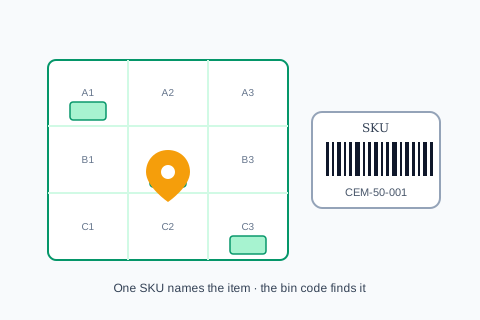
What a SKU really is
A SKU uniquely identifies one specific, distinct item — not a category, but the exact thing, down to the variant that matters for stock. A blue medium t-shirt and a blue large t-shirt are two SKUs, because you count, sell, and reorder them separately. The discipline that breaks most stockrooms is variant confusion: the same physical item recorded under three different names ("cement", "Bamburi cement", "cement 50kg") so the system thinks there are three items with a third of the true stock each. One item, one SKU, always — that single rule prevents a startling amount of inventory chaos.
Designing SKU codes that help
Good SKU codes are consistent, meaningful enough to be readable, and stable. A common pattern encodes category, then attributes, then a sequence — enough structure that a human can partly decode a SKU at a glance, without cramming so much meaning in that the code breaks the first time a product does not fit the scheme. The cardinal sins are using the supplier's code as your own (it changes when you change supplier), embedding price or a temporary attribute (which changes), and inconsistency between whoever creates them. A short, disciplined convention beats a clever, fragile one.
| Do | Don't |
|---|---|
| One SKU per genuinely distinct item | Multiple names for the same item |
| A consistent, documented coding convention | Everyone inventing their own format |
| Codes stable over the item's life | Embedding price or supplier in the code |
| Enough structure to be human-readable | Cramming every attribute into the code |
Bin locations: the address system
If the SKU is the item's name, the bin location is its home address — a code for the physical spot it lives in, such as an aisle-rack-shelf reference. Without one, finding an item depends on someone remembering where it is, counts take forever because pickers wander, and a new or temporary staff member is useless in the store. With disciplined bin locations, the system can direct a picker straight to the spot, cycle counts proceed location by location, and put-away has a defined home for everything. For a small store one location per item may suffice; for a warehouse, bin locations are what make the space navigable at all.
The naming is the foundation everything sits on
No inventory system, however capable, can compensate for bad SKUs and missing locations. If the same item exists under three codes, your stock figures are wrong before any calculation runs; if nothing has a location, no software makes a picker faster. This is why the unglamorous work of cleaning up item naming and assigning locations is almost always the highest-value first step in fixing a struggling stockroom — it is the ground the rest is built on.
SKUs and bin locations are the plumbing beneath everything else in inventory — accurate stock figures, sensible reorder points, meaningful ABC analysis. Get the naming disciplined once, and every downstream calculation has clean data to work with. Skip it, and you will spend years applying sophisticated tools to numbers that were never trustworthy in the first place.
Clean item data is the foundation the rest of the controls stand on — stock control in Kenya covers what you can build once it is in place.
Clean item data, findable stock
See one SKU per item, structured codes, and bin locations that guide picks and counts — the foundation accurate inventory needs.
Explore inventory managementFrequently asked questions
What is a SKU?
A SKU (stock keeping unit) is the unique code identifying one specific, distinct item in your system — down to the variant you count, sell, and reorder separately, like a particular size and colour. It is how the system knows exactly what an item is, and the rule that prevents most inventory chaos is one SKU per genuinely distinct item, never multiple codes for the same thing.
What makes a good SKU code?
Consistency, readability, and stability. Use a documented convention (often category, then attributes, then a sequence) that a human can partly decode, keep codes stable over the item's life, and avoid embedding price, temporary attributes, or the supplier's own code — all of which change and break the scheme. A short disciplined convention beats a clever fragile one.
What is a bin location?
A bin location is the physical address of an item in your storage — a code for the aisle, rack, and shelf where it lives. It lets the system direct pickers straight to stock, makes cycle counts proceed location by location, and gives every item a defined home for put-away, so finding stock does not depend on someone remembering where it is.
Why do SKUs and bin locations matter so much?
Because they are the data foundation everything else rests on. If the same item exists under several SKUs your stock figures are wrong before any calculation runs, and if nothing has a location no software makes picking faster. Cleaning up item naming and assigning locations is usually the highest-value first step in fixing a struggling stockroom.