
Ask AwraIQ about features, pricing, onboarding, login, integrations, security, demos, mobile apps, automation, reports, or support.
All industry pages
Batch, expiry and counter
Sell the batch that expires first, and know which ones are close.
Pharmacies and chemists use AWRA for batch and expiry tracking from the first receipt, a till that issues the soonest-expiring batch first, a daily expiry alert, enforced quarantine for damaged and expired stock, and shift close with the variance named.
Inventory software for pharmacies
The problem
Most pharmacies find out what expired at the count, when the only option left is to write it off.
Expiry dates on the box, not in the system
Short-dated stock is spotted when someone happens to pick it up.
The newest batch sold first
The till takes whatever is nearest, and the older batch ages at the back of the shelf.
Write-offs without a trail
Expired stock leaves the shelf with no quantity, reason or name against it.
How AWRA solves it
What Pharmacy & Chemists teams get.
Sell the batch that expires first at the counter, because the till takes stock from the soonest-expiring available batch rather than whichever was received last.
Get a daily alert for batches already expired or expiring within 90 days, so short-dated stock is moved, returned or written off while there are still options.
Keep quarantined, damaged and expired stock out of every sale once it is moved to a hold, with disposal written as an adjustment carrying the quantity, reason and person.
Record batch, expiry and supplier at receipt against the purchase order, so a recall names the batches that moved and where the remainder sits.
Close each shift with cash, mobile money and card takings on one record and the variance attributed to the person on the drawer.
Run blind counts on high-value lines, with the variance priced at cost before the adjustment posts.
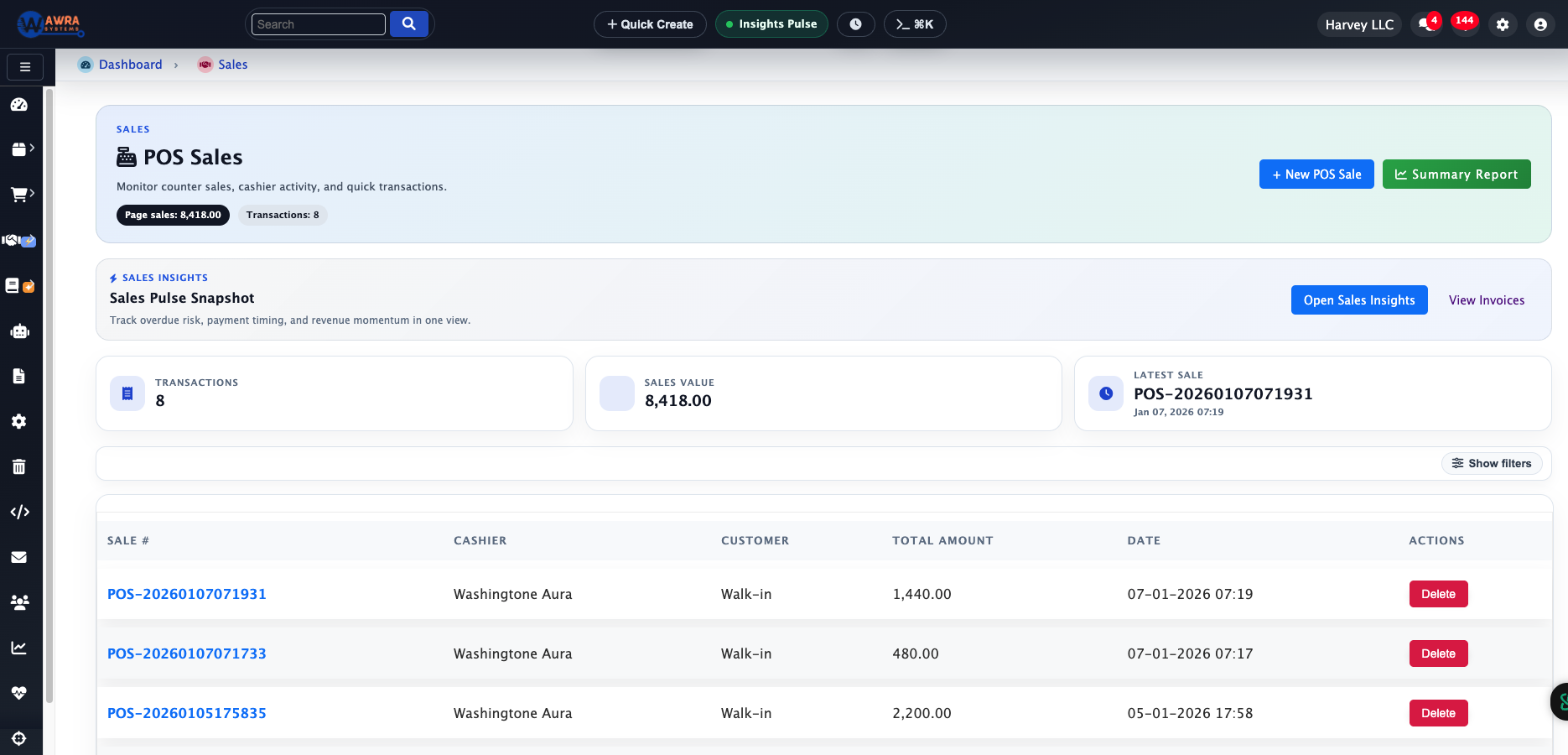
Counter sale
Sales, returns and receipts that deduct stock from the right batch.
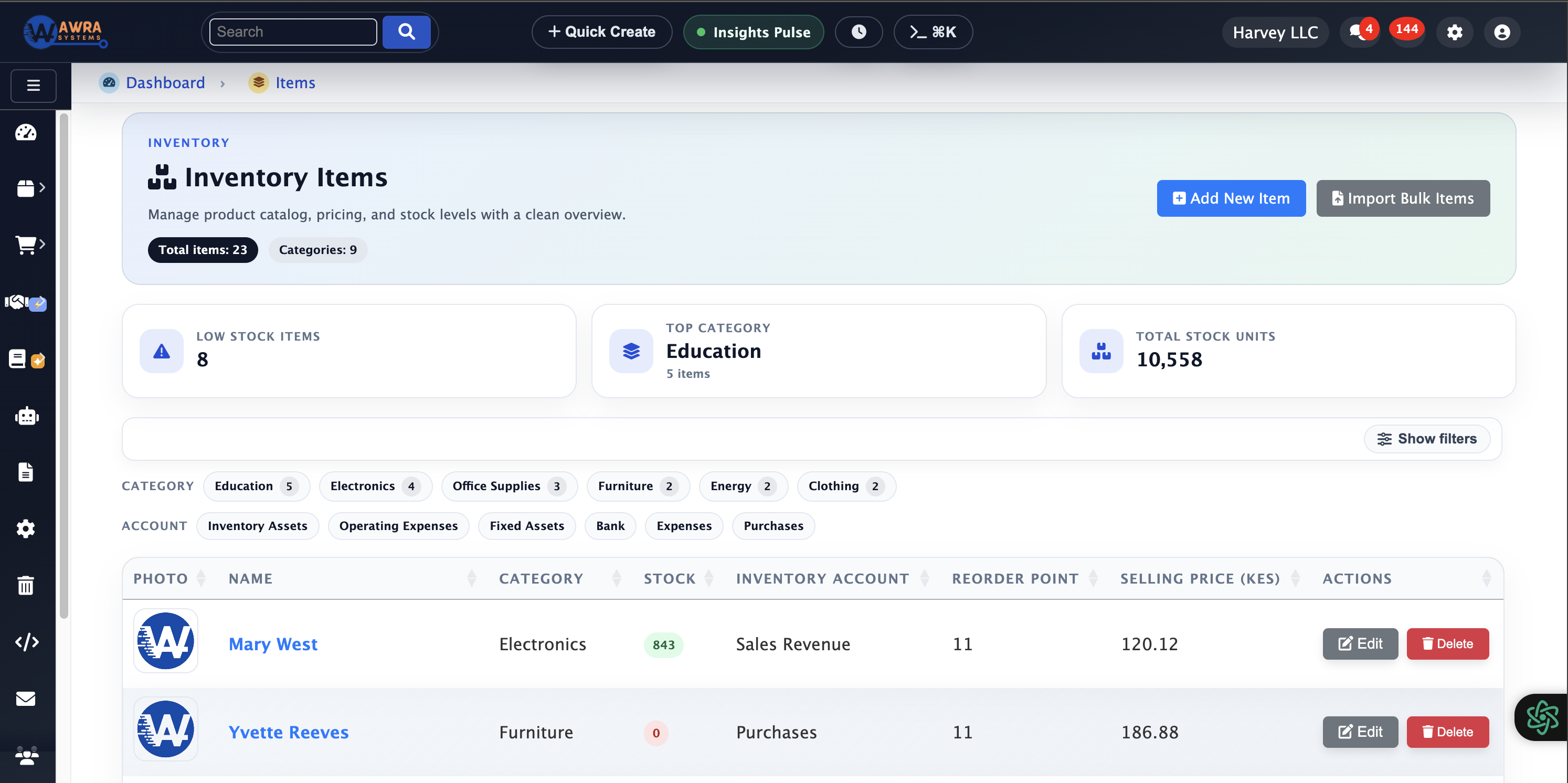
Stock by batch
Availability by item, location, batch and operating status.
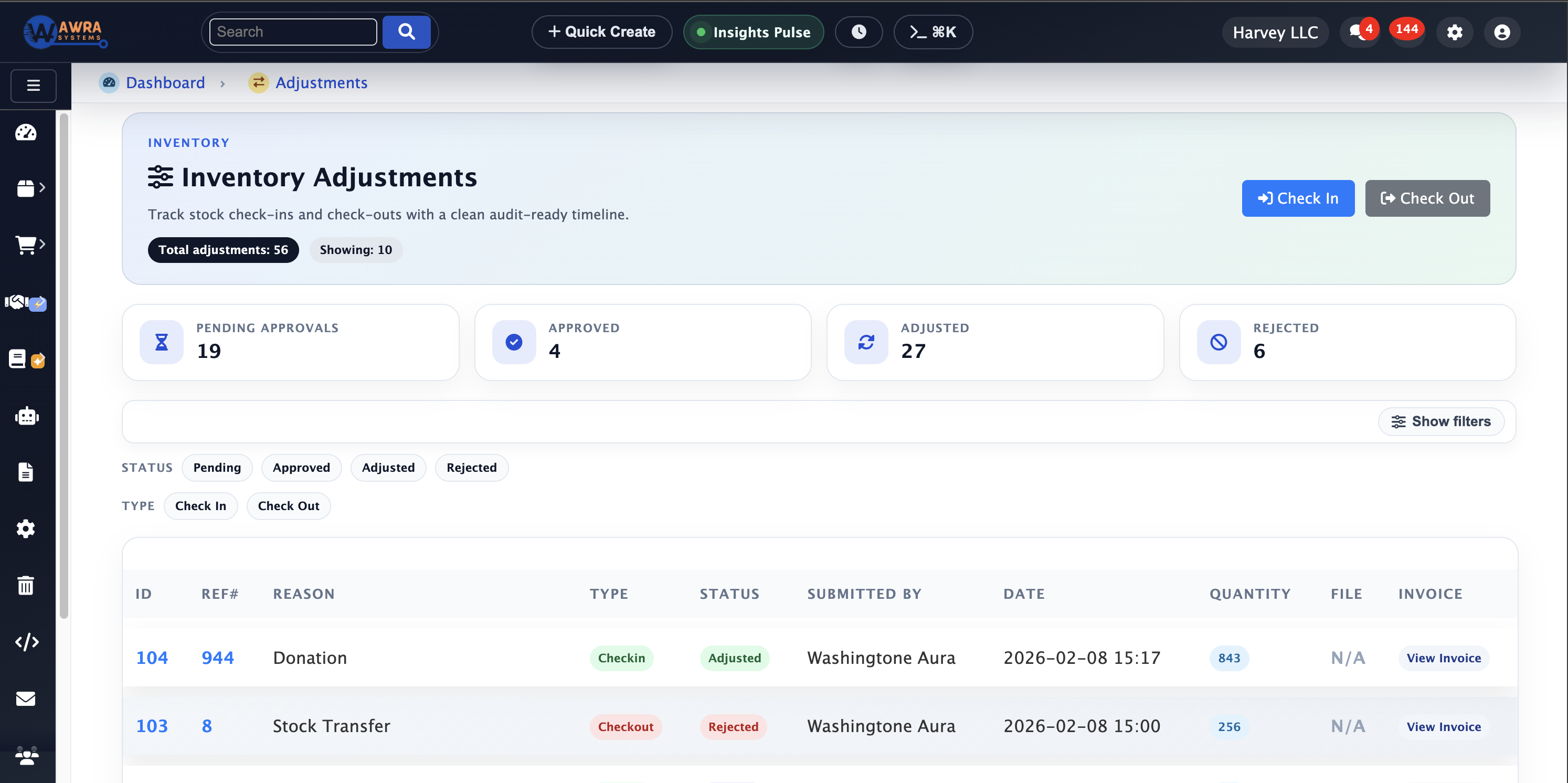
Write-offs with a reason
Disposal of expired or damaged stock recorded with quantity, reason and person.
Typical workflow
The routines AWRA runs for Pharmacy & Chemists.
Receiving with batch and expiry
- 1 Receive against the purchase order
- 2 Record batch number and expiry for each line
- 3 Hold anything damaged or short-dated on arrival
- 4 Release the rest to available stock
Short-dated stock review
- 1 Open the daily expiry alert
- 2 Check value at risk by expiry window
- 3 Return, transfer or discount what can still move
- 4 Move expired batches to a hold and write them off
Counter sale and return
- 1 Scan or search the item
- 2 Take payment and issue the receipt
- 3 Deduct the soonest-expiring batch
- 4 Reverse returns line by line against the original sale
Modules used
What a pharmacy & chemists workspace runs on.
Batch & Serial Traceability Batch, expiry and supplier recorded at receipt, and a trail for recalls See the module Quality Holds Expired and damaged stock held out of every sale See the module Point of Sale Counter sales that take the soonest-expiring batch first See the module Cycle Counts Blind counts on high-value lines, with variance priced at cost See the module
Example organisation
A three-branch community pharmacy
An illustrative profile, not a named customer
Where they are today
One owner-pharmacist, three counters, about 2,500 lines, and expiry checked by walking the shelves once a quarter.
Where they would start
They would start by switching on batch and expiry for every line, recording dates during the opening count at one branch, then moving that branch’s counter onto AWRA POS.
What changes after implementation
Before and after, in the routines you already run.
| Before | After |
|---|---|
| Expiry checked by walking the shelves | A daily alert for batches expired or expiring within 90 days |
| Whichever box is nearest goes first | The soonest-expiring available batch is sold first |
| Expired stock binned without a record | Disposal written as an adjustment with quantity, reason and person |
| A recall means searching every shelf | The batch trail shows where each batch went and what remains |
How the rollout goes
1
Switch on batch and expiry tracking for each item before the first receipt. Expiry cannot be inferred for stock already on the shelf, so the opening count is when every batch gets its date.
2
An item has one unit and quantities are whole numbers, so decide whether each line is stocked by the box, the strip or the tablet before import. Buying by the box and selling by the strip is a conversion you make yourself today; pack-to-unit conversion is commissionable work.
3
A batch that reaches its expiry date stays sellable until someone moves it to a hold — and because the till takes the soonest-expiring batch first, it is the one the till reaches for. Treat the daily alert as a task, not a notice. Prescriptions, dispensing records and a controlled-substances register are not in the product; read the Kenya clinic page for what runs now and what would be a commissioned build.
What you can measure afterwards
Expiry exposure by window
Write-off value
Count variance value
Shift cash variance
Stock cover days
Pricing
What it costs for Pharmacy & Chemists
Batch and expiry tracking, holds and counts are on every plan, and the till starts on Basic. POS counters and cash-drawer sessions — what the shift close needs — are on Pro.
Pro plan · Run on automation
KES 5,800 / month
or KES 63,800 billed yearly
Full procurement, sales, accounting and HR (employees, leave, attendance & payroll) plus workflow automation and reporting.
Before you pay anything
30-day free trial
Thirty days of the full platform, every module switched on and no card required. Choose a paid tier whenever you are ready.
See it on your process
Walk through a pharmacy & chemists workspace with us.
Bring the spreadsheet or the paper form you want to retire. We will show you the first workflow in AWRA with your own items, people and locations.
Questions
What Pharmacy & Chemists buyers ask.
Does the system stop an expired batch being sold?
Once the batch is moved to a hold, yes — held stock is excluded from every sale and issue. A batch that passes its date while still on available stock stays sellable until someone moves it, which is why the daily expiry alert should be worked as a task.
Can we buy by the box and sell by the strip?
Not as a conversion today. An item has one unit and quantities are whole numbers, so stock each line in the unit you sell. Pack-to-unit conversion is commissionable work.
Does it hold prescriptions or a controlled-drugs register?
No. Prescriptions and dispensing records belong in a clinical or pharmacy system. AWRA holds what came in, what it cost, which batch it was and where it went.
Customer story
Speak to someone who runs it.
We publish a named story only with that organisation’s consent. Ask us and we will put you in touch with a pharmacy & chemists reference you can telephone, rather than a quote you cannot check.
Ask for a referenceNext-best links
Keep the evaluation moving.
Guides, pricing and support surfaces most relevant to Pharmacy & Chemists.
Related industries
Compare adjacent operating models.

Retail
AWRA OpsHub connects POS, stock movement, replenishment, cash sessions, and branch reporting for retail operators.

Healthcare
Healthcare teams use AWRA to monitor critical consumables, control purchasing, receive supplies, and report availability by location.
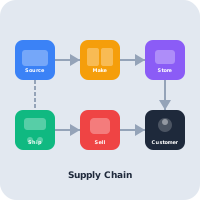
FMCG Distribution
AWRA helps FMCG distributors manage item velocity, warehouse stock, vendor lead times, branch replenishment, and sales performance.
Help Center
Need a quick answer while you read?
Run inventory, procurement, assets, sales, and field work with approved AWRA guidance for setup, migration, integrations, security, pricing, and support.